Published · Morgan Oaks Eternal Preserve
Scattering ashes and burying them beneath a tree both feel like a return to nature. Here is how California law, permanence, and the need for a place to visit differ between them.
Families who choose cremation often picture ashes being released somewhere meaningful: the ocean, a favorite trail, a mountain lake. Scattering can be a beautiful ritual. But many families later tell us they wish they had a single place to return to. Here is an honest look at both choices.
What California Allows for Scattering
- Private land: allowed with the written permission of the property owner
- Public land: allowed where local rules do not prohibit it, with permission from the managing agency where required
- At sea: allowed at least 500 yards from shore
- A permit for disposition is generally needed and is usually handled by your funeral provider
Rules can change and vary by agency, so confirm the details with your funeral provider before scattering.
Where Scattering Shines
Scattering lets a family honor a specific place that mattered to the person who died, and it can be done as a private, informal ritual. It is often the right choice for someone whose heart truly belonged to a particular river or coastline.
Where Tree Burial Shines
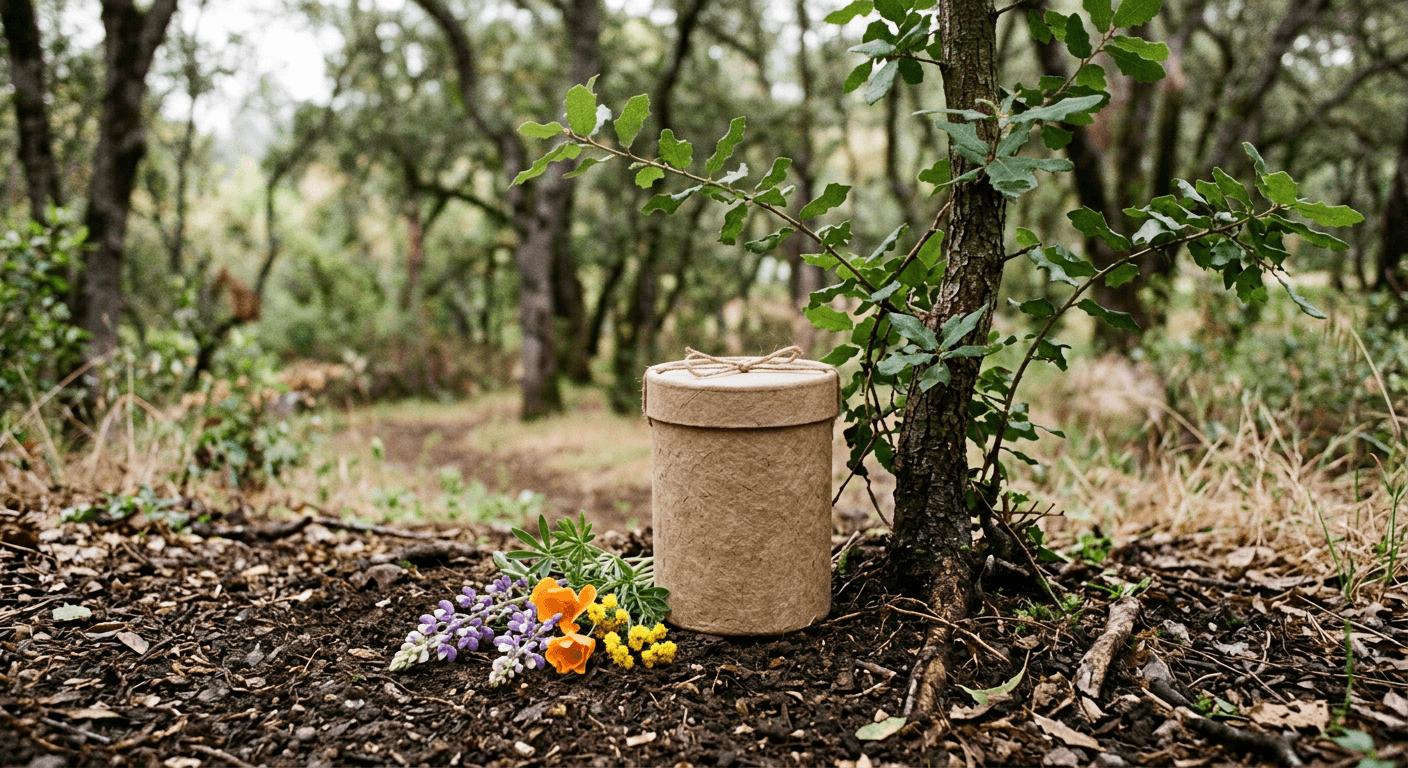
- A permanent, protected location your family can visit for generations
- A living marker that changes with the seasons
- No question about future development or access to the land
- A recorded burial site, so future relatives can find it
You Can Do Both
Some families scatter a small portion of ashes at a meaningful place and bury the rest beneath a tree at Morgan Oaks. That way there is both a ritual of release and a place to return.
If you are weighing these options, our team is glad to talk it through. Call (833) 667-4266 or request a tour.