Published · Morgan Oaks Eternal Preserve
Most people come to green burial for the same handful of reasons: no embalming chemicals, no concrete vault, no metal casket built to outlast the earth…
Most people come to green burial for the same handful of reasons: no embalming chemicals, no concrete vault, no metal casket built to outlast the earth around it. Those are good reasons. But there’s a quieter one that rarely makes it into the brochure — the fact that a conservation burial ground isn’t just less harmful than a conventional cemetery. It’s actively, visibly alive.
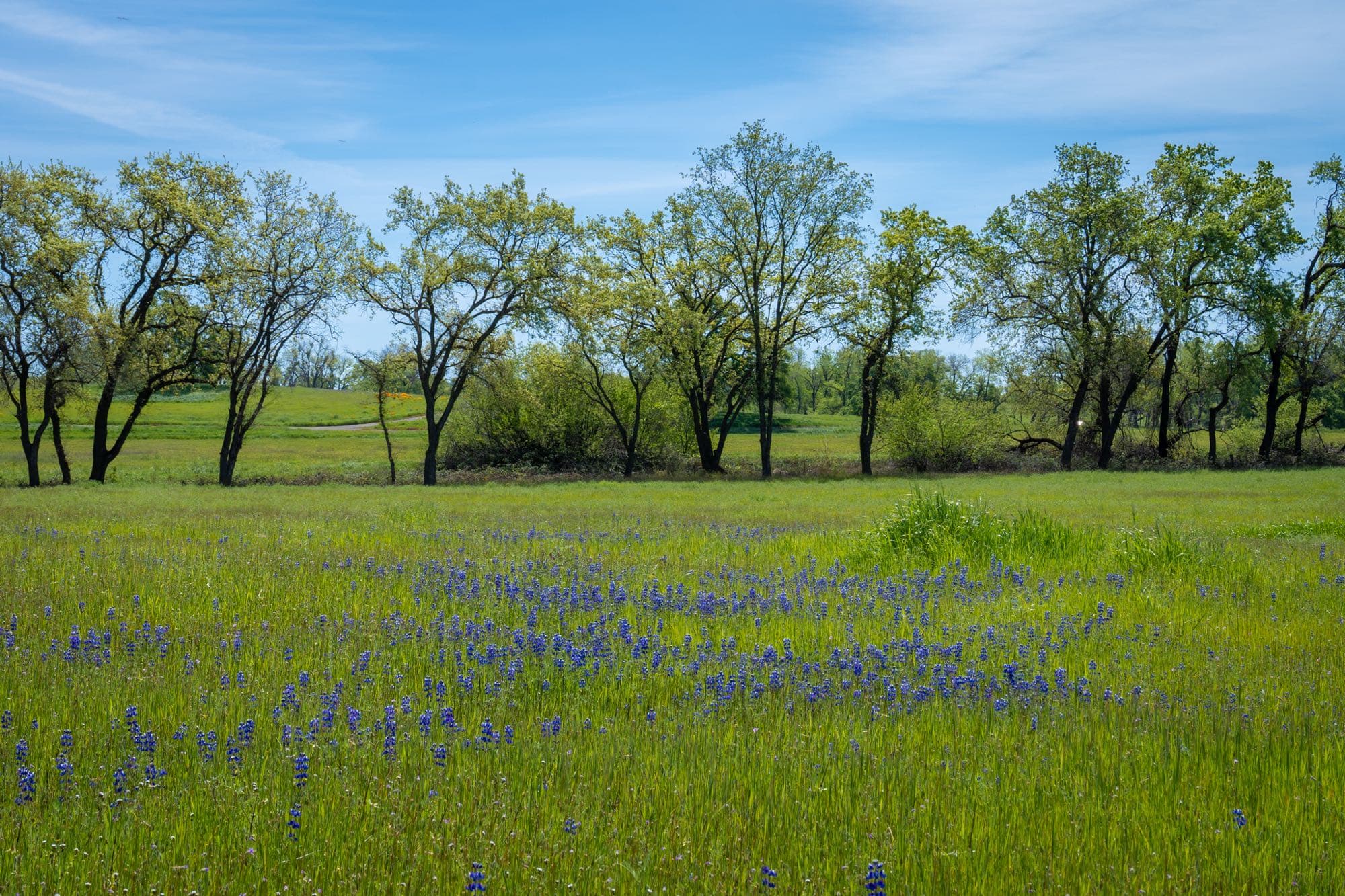
Walk the trails at Morgan Oaks in April and you’ll see it before anyone has to explain it: wildflowers pushing up through the grass between the oaks, bees working the blooms, the kind of foothill meadow that looks the same today as it did a hundred years ago. That’s not landscaping. That’s the point.
A Cemetery That Grows Instead of Just Standing Still
Conventional cemeteries are, ecologically speaking, closed systems. Mowed turf, ornamental plants that need irrigation and fertilizer, headstones set in concrete footings — the land is managed to stay exactly the same, year after year, at real environmental cost. A conservation burial ground works the other way. The goal isn’t to preserve the appearance of a place. It’s to preserve the place.
That means native grasses instead of turf. Oak woodland left intact instead of cleared. Wildflower cover that comes back on its own each spring because it belongs there — not because anyone planted and watered it into existence. When a family chooses a green burial, they’re not just opting out of embalming fluid and hardwood caskets. They’re choosing to be buried into a habitat that’s being actively restored, rather than onto a lawn that’s being artificially maintained.
What the Body Actually Gives Back
There’s a reason green burial avoids vaults, metal, and chemical preservation, and it isn’t only about avoiding harm — it’s about allowing something to happen. A body laid directly in the earth, in a biodegradable shroud or simple wood casket, breaks down and becomes part of the soil food web: nutrients taken up by nearby root systems, by the fungi and microbes that keep a woodland healthy, eventually by the plants that pollinators depend on.
It’s a strange thing to sit with, but families often find it genuinely comforting once they do. The person you loved isn’t sealed away from the landscape. They become part of what feeds it — the same wildflowers blooming along the trail, the same oaks that will still be standing in a century, the same bees and butterflies moving from bloom to bloom each spring. It’s not a metaphor for renewal. It’s the literal, biological version of it.
Pollinators Need Places Like This More Than Ever
Native bee and butterfly populations across California have been under pressure for decades — habitat fragmentation, pesticide drift, and the steady replacement of wild landscapes with manicured ones haven’t done them any favors. A conservation burial ground, almost by accident, becomes a small refuge. No pesticides. No herbicide-treated turf. Just an intact patch of foothill habitat that keeps expanding, memorial by memorial, as more of the land is set aside and protected.
There’s something fitting in that. Green burial protects land specifically because families are choosing to be buried there — every plot chosen is acreage that won’t be developed, mowed flat, or paved over. The more people choose it, the more habitat survives. It’s one of the only end-of-life decisions that leaves the world with more, not less.
Visiting Becomes Something Different, Too
Families who’ve buried a loved one at a conservation site often describe visits differently than they expected to. It’s less “standing at a grave” and more “walking into a place that’s alive.” Watching what’s blooming change with the seasons. Noticing which birds show up in the fall. Bringing kids or grandkids to see the wildflowers a parent or grandparent is, in some very real sense, part of now.
It doesn’t erase grief — nothing does — but it gives grief somewhere to go besides a headstone and a mowed square of grass. A walk through a meadow in bloom is a different kind of remembering than standing at a marker, and for a lot of families, it’s the kind that actually helps.