Published · Morgan Oaks Eternal Preserve
There’s a particular kind of quiet at Morgan Oaks that most cemeteries can’t offer, because most cemeteries are built to resist time. Mowed lawns. Poured…
There’s a particular kind of quiet at Morgan Oaks that most cemeteries can’t offer, because most cemeteries are built to resist time. Mowed lawns. Poured concrete. Granite meant to outlast the family that chose it. Morgan Oaks does the opposite. It leans into time. It lets the seasons keep working on the land the same way they always have, and it asks something unusual of grief: don’t fight the cycle, join it.
So instead of another post about what green burial is — you can find that on our FAQ page — this one follows the land itself through a single year. Because at Morgan Oaks, the ground isn’t a backdrop for memory. It’s an active participant in it.
Winter: The Rest Before the Return
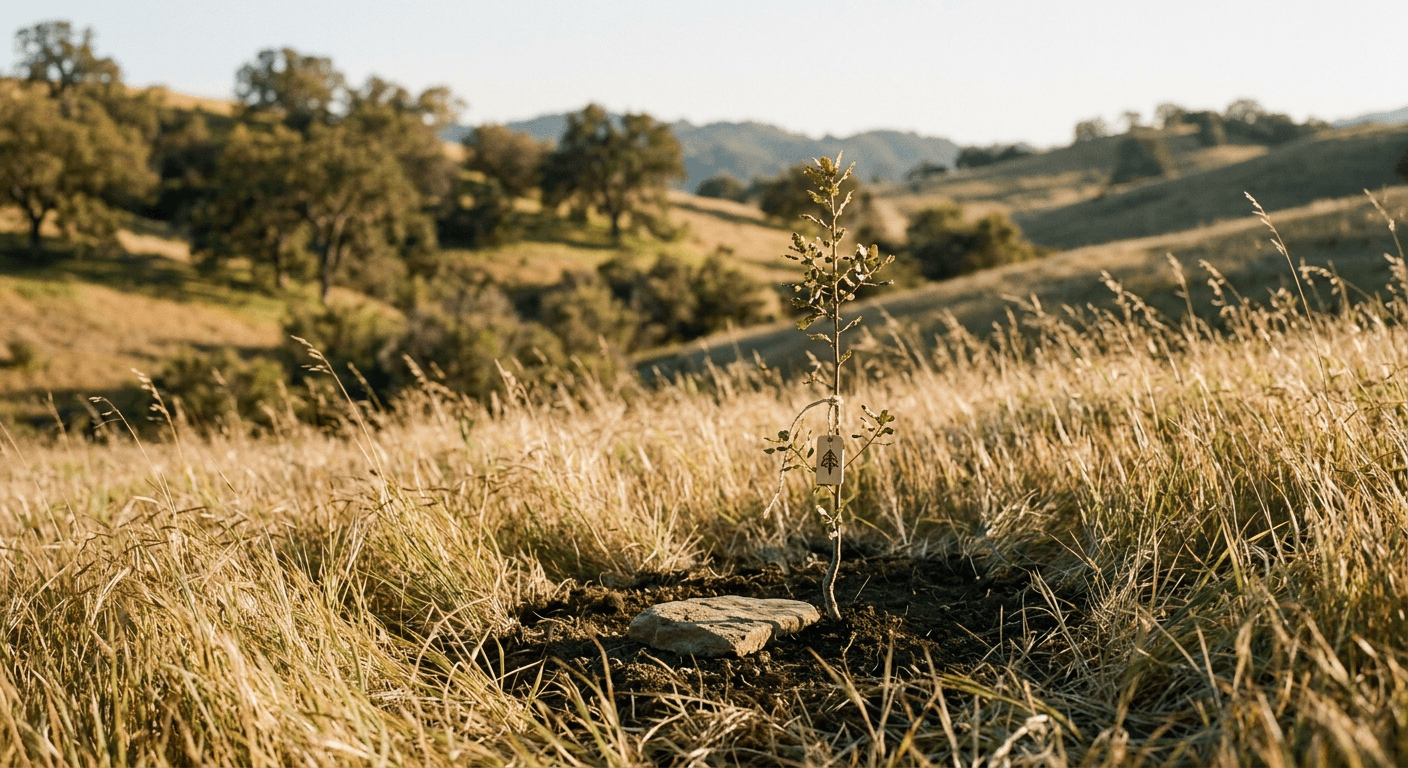
In January, the oaks at Morgan Oaks look finished — bare branches, low light, the foothills gone the color of old paper. It’s tempting to read winter as the sad season here, the one that matches loss most literally. But walk the trails and you’ll notice something else: the ground is working. Underneath the visible stillness, root systems are drawing in, fungal networks are threading through soil, and the compounds that will feed spring’s first blooms are already being assembled in the dark.
This is, unglamorously, also what a green burial is doing. There’s no vault sealing a body away from the earth, no chemical embalming pausing the process indefinitely. The land is allowed to do in winter what it has always done — hold, transform, prepare — and a life laid to rest here becomes part of that same unglamorous, essential work.
Spring: What Comes Back First
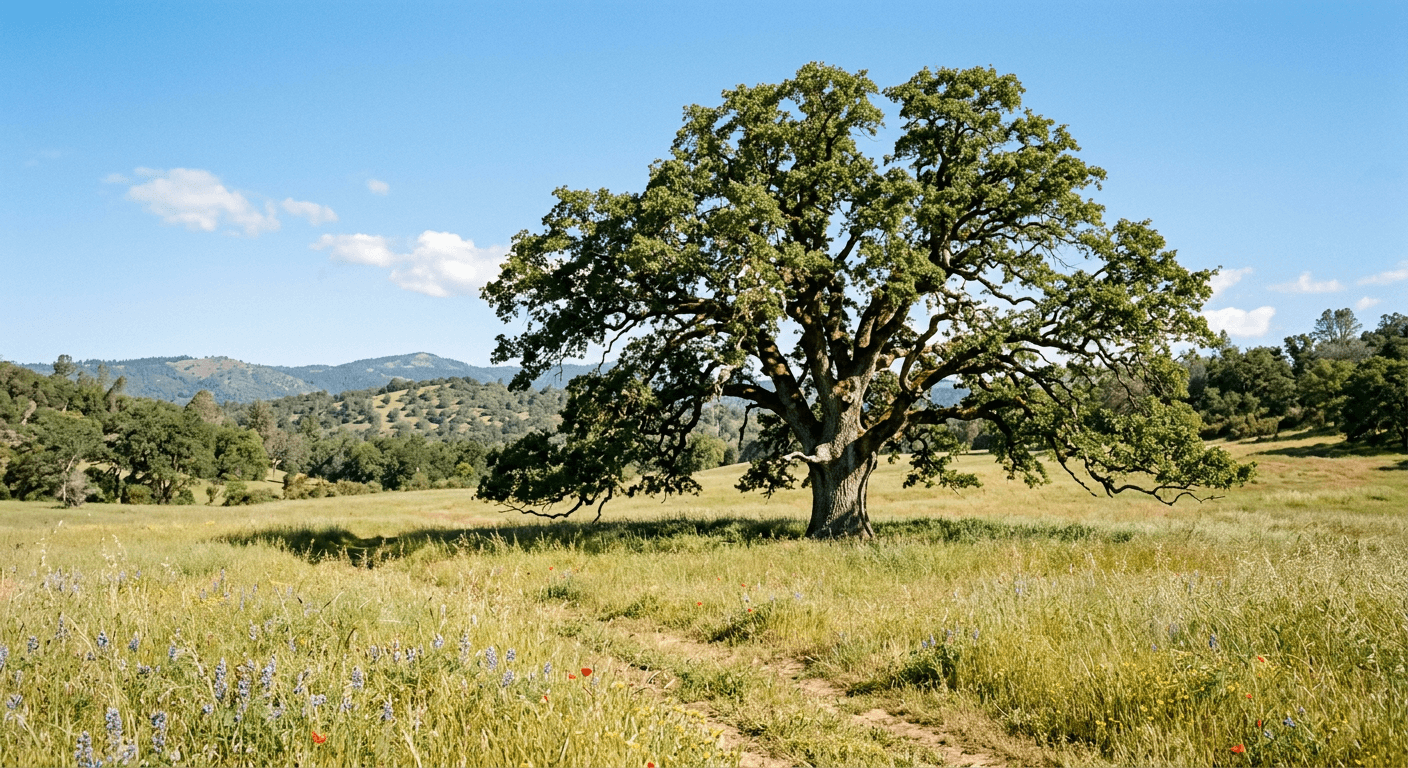
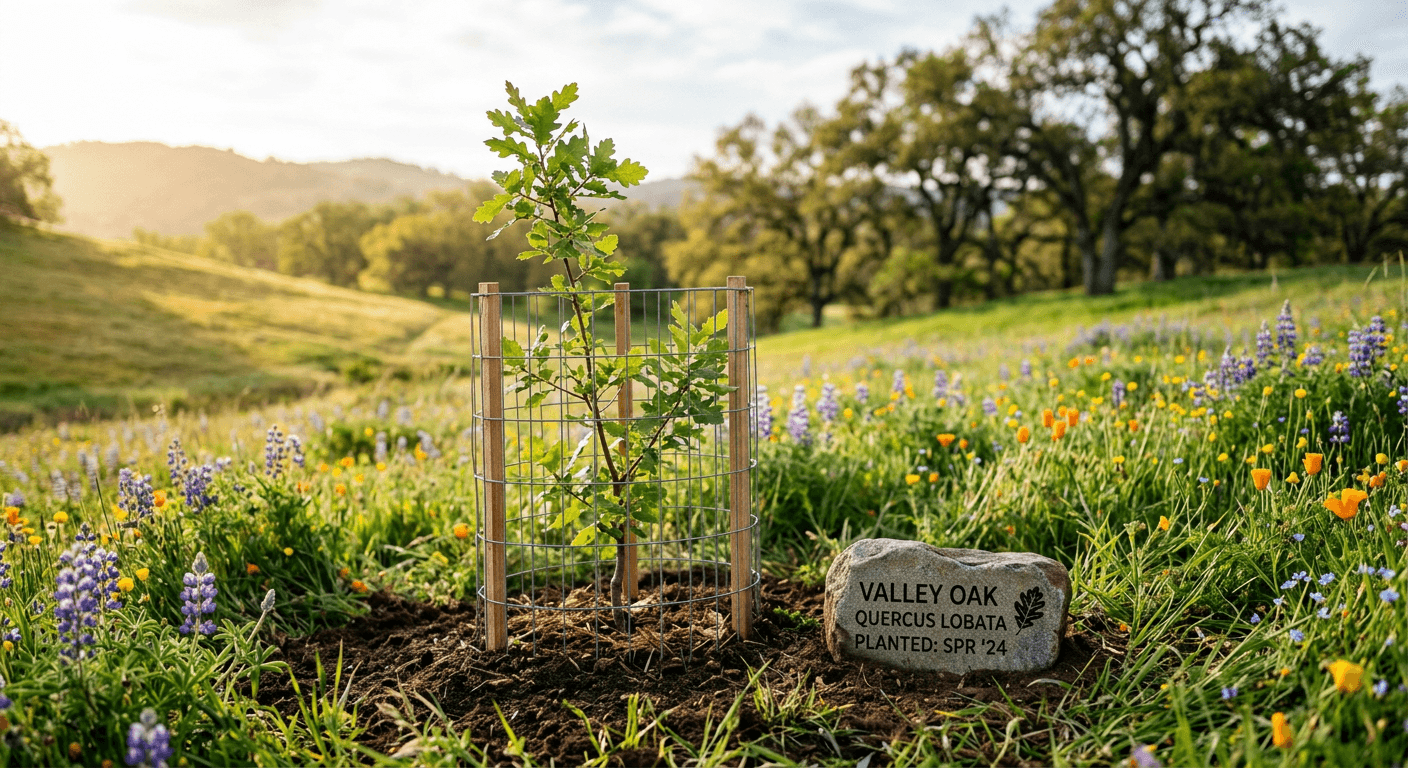
By March, the wildflowers arrive before almost anything else does, scattering color across ground that a few weeks earlier looked entirely dormant. Families who chose a spring burial often come back this time of year expecting sadness and find something closer to astonishment — the exact patch of earth where they said goodbye is, without anyone’s help, becoming beautiful again on its own schedule.
This is the piece of green burial that’s hardest to explain and easiest to feel once you’ve stood on the land: a conventional grave is static, a monument to a moment. A green grave keeps participating. It isn’t a wound in the landscape that scars over. It’s tissue that regenerates.
Summer: The Long, Steady Middle
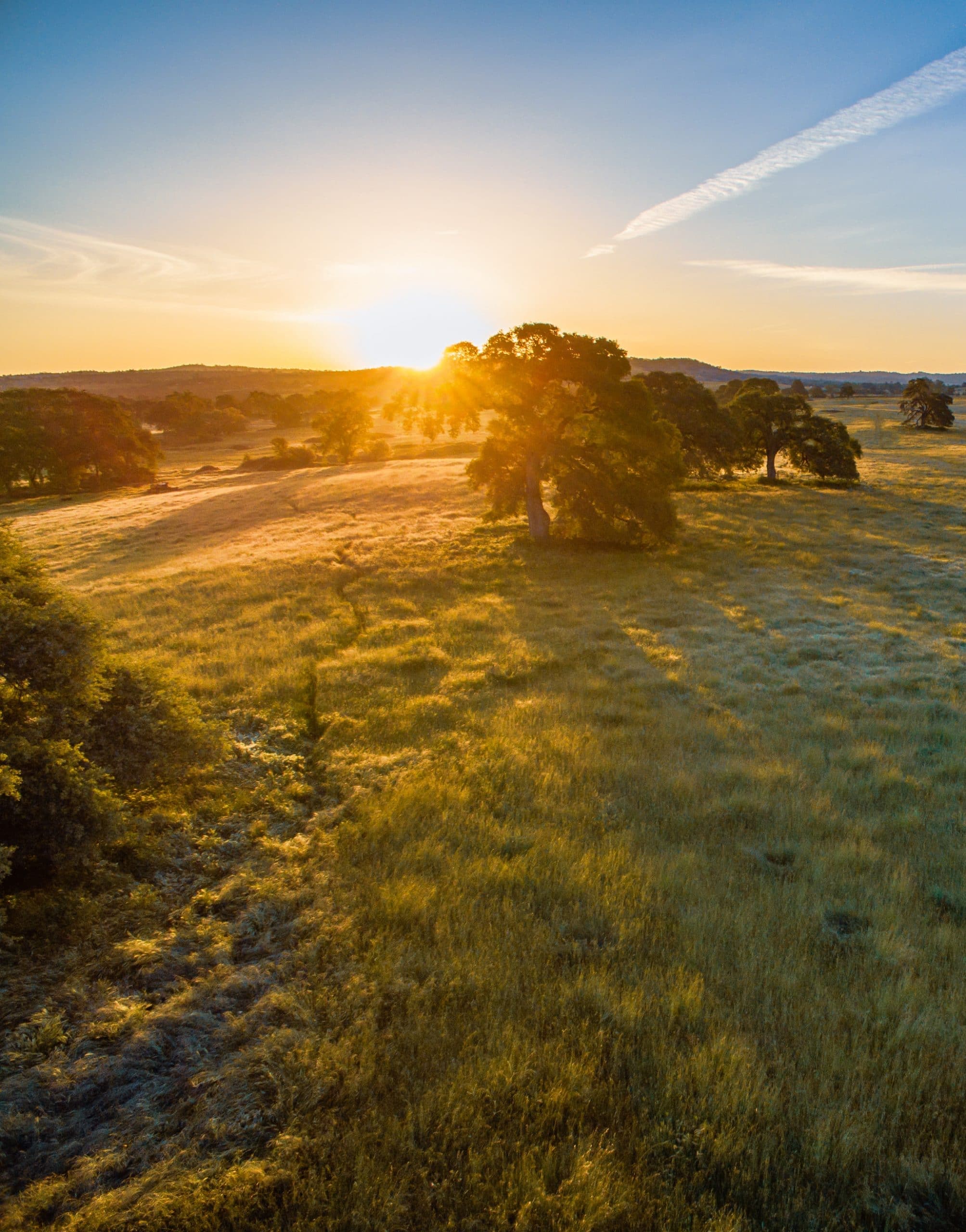
Summer at Morgan Oaks is the least photographed season and maybe the most important one. The wildflowers have mostly given way to deep green groundcover and the dry gold of the California foothills. Nothing dramatic is happening above ground. This is where most visitors — and most grief — actually lives: not in the sharp color of spring or the stillness of winter, but in the long, undramatic middle where healing is mostly just continuing.
We hear this from families often: the hardest months aren’t the first ones. They’re the later ones, when the flowers from the funeral have long since faded and the casseroles have stopped arriving, but the missing hasn’t. Summer at Morgan Oaks doesn’t rush that. The land isn’t asking anyone to feel resolved. It’s just staying steady, the way you’d want a friend to.
Fall: Letting Go on Purpose
Autumn is when the oaks do the thing that gives this place its name: they let go of what they no longer need. Leaf by leaf, on purpose, not as a failure but as a strategy — the tree survives by releasing, and what it releases becomes the soil that feeds it next year.
It’s hard to walk these trails in October and not think about what it means to release someone on purpose rather than simply lose them. A green burial asks families to participate in that same kind of intentional letting go — choosing biodegradable materials, forgoing embalming, allowing the body to return to the earth rather than resisting it. It’s a harder ask in the moment. Families consistently tell us it’s a gentler one to live with afterward.
A Cemetery That Keeps Being Alive
Most cemeteries are designed to look the same in November as they do in May — that permanence is the whole sales pitch. Morgan Oaks makes a different promise: this place will keep changing, the way the person you’re honoring was always part of something larger and always in motion.
That’s the real difference between a green burial ground and a traditional one. It isn’t only the absence of concrete vaults or embalming chemicals, though that matters. It’s that the land keeps doing what land does — resting, blooming, holding steady, letting go — and everyone resting within it keeps being part of that instead of standing apart from it.
If you visit in December, the oaks will look bare. Come back in April, and you’ll understand why that never meant anything was over.
Morgan Oaks Eternal Preserve is a green burial cemetery in Placer County, California, dedicated to natural memorial landscapes and land conservation. To learn more or schedule a tour of the property, call (833) 667-4266 or request a tour online.